

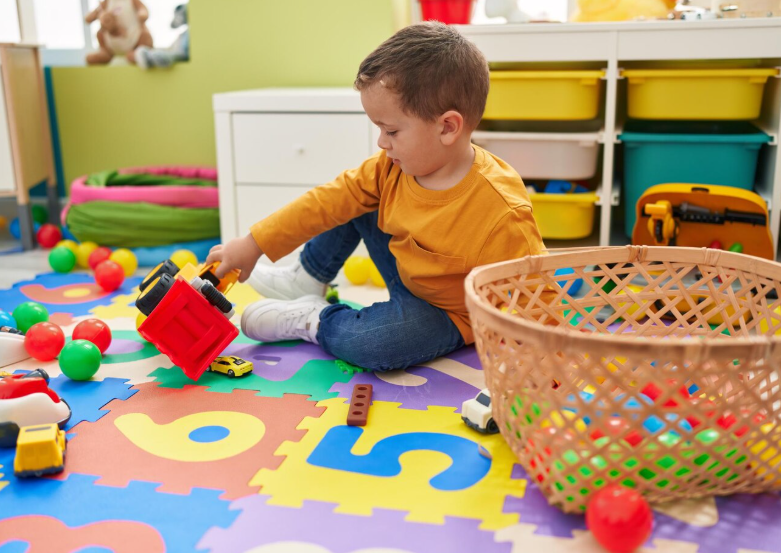
Children are spending more time in structured activities than ever before. From scheduled playdates to organised classes and screen-heavy downtime, the simple act of letting a child play alone has quietly slipped away from many households. Yet child development experts are consistently pointing back to one thing: independent play is not a luxury, it is a necessity.
If you are a parent exploring early years options and searching for a nursery in Pinner that genuinely values child-led learning, understanding the power of independent play can help you make the right choice for your little one.
What Exactly Is Independent Play?
Independent play is when a child engages in an activity entirely on their own, without being directed, entertained, or closely supervised by an adult. It does not mean leaving a child unattended. It means giving them the freedom to choose what they do, how they do it, and for how long.
It might look like a toddler stacking blocks alone in the corner of a room. A four year old drawing pictures of imaginary creatures. A six year old building a fortress out of sofa cushions. These moments, seemingly simple, are where some of the most important developmental work happens.
Why Independent Play Matters More Than Most Parents Realise
It Builds a Strong Sense of Self
When children play alone, they make their own decisions. They choose the game, set the rules, and solve the problems that come up. Over time, this builds a child’s sense of identity and self-worth. They learn that they are capable, that their ideas have value, and that they can entertain themselves without needing constant input from others.
This inner confidence is something that structured activities, however well-designed, simply cannot replicate in the same way.
It Strengthens Creativity and Imagination
A blank canvas is more powerful than a colouring book. When a child is not told what to do, their imagination takes over. They create stories, invent characters, and build entire worlds from scratch. This kind of open-ended thinking is closely linked to creative problem-solving, which is one of the most sought-after skills in adult life.
Children who regularly engage in imaginative solo play tend to:
- Think more flexibly when facing challenges
- Come up with original ideas rather than copying others
- Develop stronger narrative and storytelling abilities
- Show higher levels of curiosity and motivation
It Improves Emotional Regulation
This is one that surprises many parents. When a child plays alone and hits a frustrating moment, like a tower that keeps falling or a puzzle piece that will not fit, they have to manage those feelings themselves. There is no adult immediately stepping in to fix it or soothe it away.
Over time, children learn to sit with frustration, regulate their emotions, and persist through difficulty. These are foundational emotional skills that support mental wellbeing well into adulthood.
It Develops Focus and Attention
Independent play naturally encourages deep focus. When a child is absorbed in something they have chosen themselves, they can stay with it for longer than most adults expect. This is sometimes called a flow state, and it is incredibly valuable for developing the kind of sustained attention that supports learning in school and beyond.
Children who have regular unstructured play time often find it easier to concentrate, follow through on tasks, and engage in classroom settings.
It Supports Healthy Independence
One of the greatest long-term gifts of independent play is that it teaches children they do not always need someone else to feel content or capable. This reduces anxiety, builds resilience, and prepares children for the natural transitions of life, starting school, making new friends, navigating challenges on their own.
How to Encourage Independent Play at Home
Many parents feel guilty stepping back, but giving your child space is an act of trust and love. A few practical ways to encourage it:
- Set up a safe, accessible play space where your child can explore freely
- Offer open-ended materials like blocks, clay, paper, and loose parts rather than toys with only one use
- Resist the urge to jump in when your child seems bored. Boredom is often the spark that ignites creativity
- Start with short periods and gradually extend the time as your child builds confidence
- Avoid over-praising every little thing they do. Let them feel the satisfaction of doing something for themselves
What Good Early Years Settings Know
The best nurseries and early years settings understand that child-led play is not a gap in the timetable. It is the timetable. When children are given the freedom to explore, investigate, and create on their own terms, they learn more deeply and more joyfully than in any adult-directed task.
Look for an early years environment that:
- Balances structured learning with free play time
- Provides rich, open-ended resources that invite exploration
- Trusts children to follow their own interests
- Trains staff to observe and support rather than constantly direct
A Final Thought for Parents
You do not need to fill every minute of your child’s day. Some of the most important growing they will ever do happens in those quiet moments when they are left to their own imagination. A child who knows how to play alone is a child who knows how to think, feel, and be in the world.
Supporting independent play from an early age is one of the simplest and most powerful investments you can make in your child’s future.
