
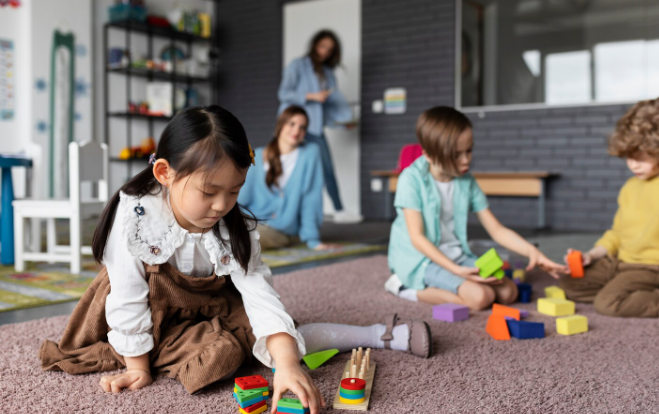
Parents in Pinner want more than just academics for their children—they want them to grow into confident, independent thinkers. Montessori teaching offers a unique, child-centered approach that helps children flourish academically, socially, and emotionally. By focusing on hands-on learning and self-paced progress, Montessori education nurtures the whole child. For families seeking a balanced, enriching start to education, a Montessori school in Pinner could be the ideal choice.
1. Encouraging Independence from an Early Age
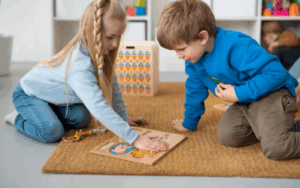
In Montessori classrooms, children are encouraged to take responsibility for their learning. They choose activities, set their pace, and learn through exploration.
Key benefits include:
-
Developing decision-making skills.
-
Learning to manage time effectively.
-
Building confidence through self-achievement.
This independence prepares them for future academic and personal challenges.
2. Hands-On, Experiential Learning
Montessori education values learning by doing. Instead of passively listening, children work with tactile, real-world materials.
Examples include:
-
Using counting beads to understand numbers.
-
Practical life tasks like pouring, cleaning, or gardening.
-
Science experiments to explore natural concepts.
This active engagement deepens understanding and builds curiosity.
3. Mixed-Age Classrooms for Peer Learning
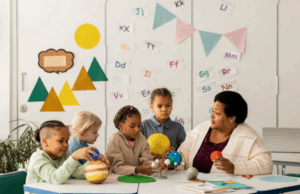
Montessori classrooms group children of different ages together. Older students mentor younger ones, and younger children learn by observing peers.
This fosters:
-
Cooperation instead of competition.
-
Empathy and patience in older students.
-
A strong sense of community in the classroom.
Peer learning boosts social and academic development for all ages.
4. Focus on the Whole Child
Montessori education doesn’t just teach subjects—it develops life skills and emotional intelligence.
Holistic growth is supported by:
-
Activities that promote self-discipline and respect.
-
Lessons on empathy, kindness, and cultural awareness.
-
Opportunities for self-expression through art, music, and movement.
Children leave with skills for both academic success and life.
5. A Calm and Respectful Learning Environment
Montessori classrooms are designed for peace, order, and focus. Every detail—from furniture to learning materials—is tailored to the child’s needs.
This environment helps:
-
Improve concentration and attention span.
-
Reduce anxiety and overstimulation.
-
Encourage a love for learning without pressure.
Such settings are especially valuable in today’s busy world.
Montessori teaching provides children in Pinner with the tools they need to thrive academically and personally. By nurturing independence, encouraging curiosity, and fostering a love for learning, it sets a strong foundation for lifelong success. For parents who value a child-centered approach, enrolling in a Montessori Nursery in Pinner could be one of the most rewarding decisions they make.
FAQs
Q1: What makes Montessori teaching different from traditional methods?
Montessori teaching focuses on child-led learning rather than teacher-directed instruction. Children choose from a range of hands-on activities based on their interests, learning at their own pace. The teacher acts as a guide rather than a lecturer, observing and supporting progress. This approach builds independence, critical thinking, and self-motivation. In traditional classrooms, lessons are often structured around a fixed schedule and group pace. Montessori’s flexibility allows each child to develop in ways that best suit them, making it especially beneficial for young learners in diverse and dynamic communities like Pinner.
Q2: How does a Montessori school in Pinner support independence?
Montessori schools encourage independence through carefully designed environments and self-directed learning. Children are given age-appropriate responsibilities like choosing their work, cleaning up after activities, and caring for classroom plants or pets. They learn problem-solving by working through challenges without constant adult intervention. Teachers provide guidance only when needed, fostering self-reliance. This builds confidence, resilience, and decision-making skills from an early age. In a Pinner setting, this also means children grow comfortable navigating their community, preparing them for both academic advancement and real-world situations in later life.
Q3: Is Montessori suitable for all children?
Yes, Montessori can benefit children with a wide range of personalities, learning styles, and abilities. Because the approach is individualized, each child progresses at their own pace without the pressure of competing with peers. Shy children often gain confidence, while more active learners find productive ways to channel their energy. For children with special educational needs, Montessori’s emphasis on sensory-based and practical activities offers meaningful learning experiences. In Pinner, where families value diverse educational opportunities, Montessori provides an adaptable environment that respects each child’s unique strengths and challenges.
Q4: How do mixed-age classrooms work in Montessori education?
In Montessori classrooms, children are grouped in multi-age ranges—often spanning three years. Younger children learn by observing older peers, while older ones reinforce their knowledge by teaching concepts they’ve mastered. This promotes collaboration rather than competition. The approach mirrors real-life situations, where people of different ages work together. Teachers facilitate these interactions to ensure all children are supported. In Pinner, this method helps create a strong community feel within the school, encouraging children to build leadership skills, empathy, and respect for others’ learning journeys.
Q5: How can parents support Montessori learning at home?
Parents can extend Montessori principles into the home by creating spaces where children can work independently. This might include low shelves for toys, child-sized furniture, or accessible art supplies. Encourage children to participate in daily tasks like cooking, cleaning, and gardening. Avoid over-scheduling so they have time for self-directed play and exploration. Offer choices rather than commands, fostering decision-making skills. In Pinner, local parks, libraries, and community events can also provide opportunities for hands-on learning. By reinforcing Montessori habits at home, parents help children grow into confident, capable, and curious learners.
Summary:
Montessori teaching in Pinner empowers children to learn independently, explore through hands-on activities, and develop essential life skills. With mixed-age classrooms, a focus on the whole child, and a calm environment, it nurtures curiosity, confidence, and social growth. For parents seeking a child-centered education, a Montessori Nursery offers a proven path to helping children thrive both academically and personally.
