

Imagine it’s 1946. World War II has just ended, and millions of young parents are coming home to start families. Back then, parenting felt like being a drill sergeant. Doctors told parents: “Don’t hug your baby too much or you’ll spoil them,” and “Feed them exactly every four hours—if they cry in between, let them.”
Then came Dr. Benjamin Spock.
He wrote a book that felt like a warm hug. It wasn’t just a manual; it was a revolution that changed how families understood children and early learning. Today, many early years settings, including a nursery in pinner, still follow the same philosophy of trust, care, and understanding that Spock encouraged in parents.
The Big Idea: “You Know More Than You Think”
Before Dr. Spock, parents were scared of their own shadows. They were terrified of “doing it wrong.” Spock’s book started with a line that changed everything: “Trust yourself. You know more than you think you do.”
He told parents that they were the experts on their own children. This one shift in mindset—moving from fear to confidence—is the reason the book sold over 50 million copies.
The Three Pillars of the “Spock Style”
- The End of the “Robot” Schedule
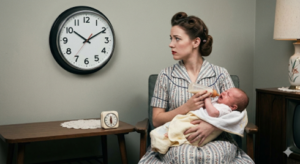
In the old days, if a baby was hungry at 2:00 PM but the “schedule” said 4:00 PM, the baby stayed hungry. Spock said, “No. If the baby is hungry, feed the baby.” * The Result: Babies were calmer, and parents stopped living by the stopwatch. This was the birth of “Demand Feeding.”
- Hugs Are Actually Medicine
Experts used to say that showing too much love made children weak. Spock disagreed. He argued that children who feel loved and safe grow up to be the most independent.
- The Legacy: He turned the home from a “training camp” into a place of affection. He believed a happy child learns better than a scared one.
- Understanding the “Terrible Twos”
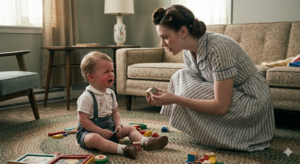
Before Spock, if a toddler had a tantrum, parents thought the child was “bad.” Spock explained that a two-year-old is just trying to figure out how to be their own person.
- The Lesson: He taught parents to be patient instead of angry. He showed that “misbehavior” is often just a child growing up.
The “Big Mistake” (A Lesson in Learning)
Even the world’s most famous doctor didn’t get everything right. For a long time, Spock told parents to put babies to sleep on their tummies so they wouldn’t choke.
Decades later, scientists realized this was wrong. They found that babies are much safer sleeping on their backs.
- The Data: When the world switched from Spock’s “tummy sleep” to “back sleep,” the number of babies dying from SIDS (Sudden Infant Death Syndrome) dropped by 50%. It’s a reminder that even “common sense” has to change when we get better data.
The Spock Summary: 4 Things to Remember
| Old School (Before Spock) | Spock School (The Revolution) |
| Strict Schedules: Feed by the clock. | Listen to Baby: Feed when hungry. |
| Distance: Don’t “spoil” them with hugs. | Warmth: Love makes them stronger. |
| Fear: Children should be seen, not heard. | Respect: Children are small people with feelings. |
| Control: Use the rod to teach lessons. | Guidance: Use kindness to teach lessons. |
The Bottom Line
Dr. Spock’s book stayed a bestseller for over 50 years because it gave parents permission to be human. He proved that the best tool a parent has isn’t a medical degree—it’s a loving heart and a bit of common sense.
